
IQ Blast Review & Research Results
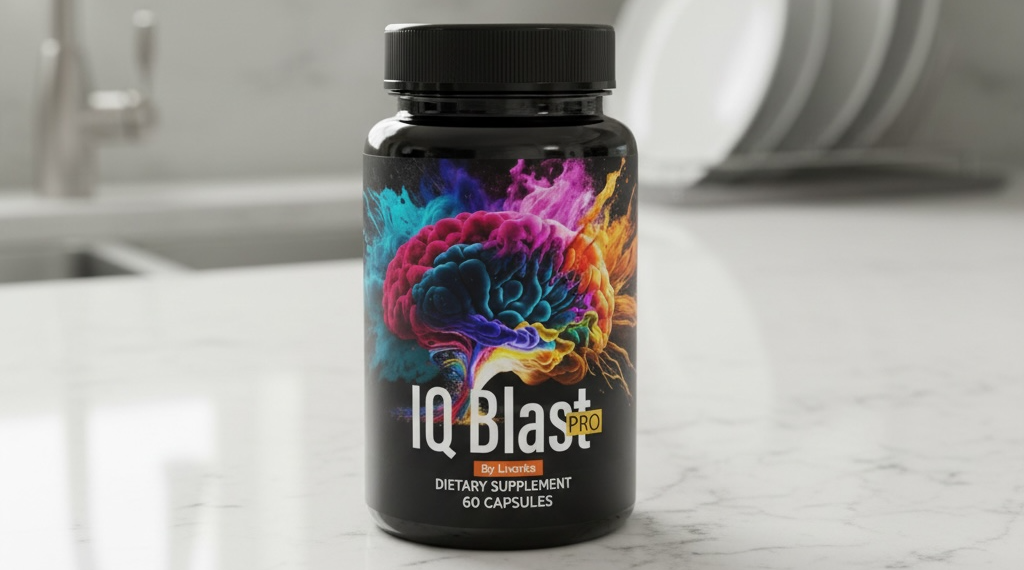
By Richard Davidson, February 12 2026
Introduction
In my IQ Blast review, I'm researching and testing a new brain supplement, or nootropic, sold through a company called BuyGoods. It's likely you haven't heard of the company, but in short, they are an online marketing and retail company somewhat known for selling through direct response advertising. That means you've likely encountered a long sales video before managing to find any real details on the product, or its ingredients. It's fair to say this marketing approach is fairly aggressive, but it's used by some companies because it can be very persuasive.
It can often be the case that the more aggressively marketed a product is, the less likely it is to really perform in use. Whilst not a universal principle, it's perhaps not a bad rule of thumb to keep in mind. And whilst sales techniques can raise questions, what I'm most interested in is whether IQ Blast actually works in practice - and whether there are better options out there.
Key Points
- IQ Blast's marketing significantly outweighs the product's efficacy. The product is marketed with AI video and leverages emotional storytelling and a number of hard to pin down claims and citations. Skepticism is advisable.
- IQ Blast's main ingredient is BCAAs, a muscle recovery supplement that has no real evidence for supporting the claims made by IQ Blast.
- The other ingredients in IQ Blast are either underdosed or token inclusions, relative to the clinical evidence. At first glance some of these ingredients look good on the label, but the amounts and forms used aren't in line with the scientific research into their use. Furthermore, many proven and highly effective nootropic ingredients are missing altogether.
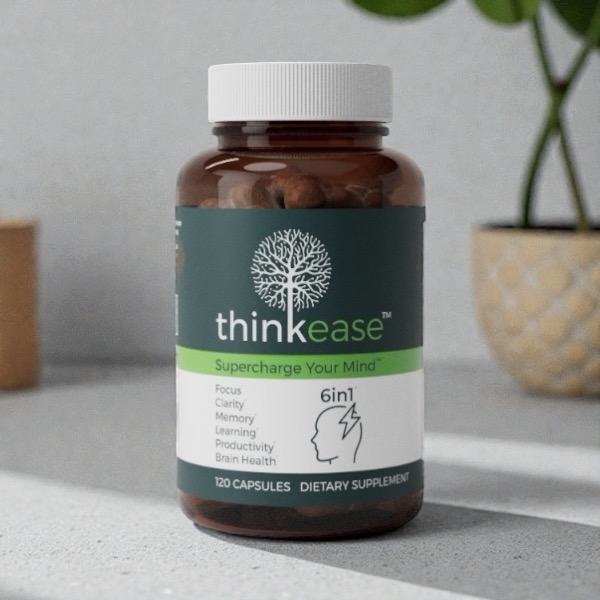
- My recommendation is to use a brain supplement that follows the latest clinical research. ThinkEase is the top-rated product in my testing. Not only does it use 15 widely studied and proven nootropic ingredients, it uses amounts shown to be effective in research and uses premium standardized extracts.
What Is IQ Blast?
I watched a very long sales video as part of my research and was a little surprised to see a number of elements that seem to be AI generated, rather than using real people throughout. Similarly some of the references mentioned I couldn't pin down - for example, I couldn't find any credible information on the "Brain Savior" institute, or the individuals interviewed in the sales video.
Sales techniques aside, what actually is IQ Blast. It's simply a fairly basic two capsule serving supplement. The formula is very simple and nothing stands out as particularly good, novel or interesting. It's comprised of 5 ingredients, plus 3 other ingredients which have no function beyond helping the other ingredients mix and filling up the capsules (magnesium stearate, microcrystalline cellulose, hydroxypropyl methylcellulose) - not ingredients I like to see in any supplement, but fairly common nonetheless.
Overall, it's both a basic formulation and one where the inrgredients that are present are in notably lower amounts than clinical research suggests is necessary for any meaningful brain benefits.
IQ Blast Ingredients
Branched Chain Amino Acids (540 mg), Bacopa Monnieri Extract (200 mg), Rhodiola Rosea Root Powder 3% Salidroside (100 mg), L-Theanine (100 mg), Panax Ginseng Extract (90 mg)
Other ingredients: Microcrystalline Cellulose, Hydroxypropyl Methylcellulose (Capsule), Magnesium Stearate
IQ Blast Ingredients Versus Top Alternative (ThinkEase)
Ingredient | IQ Blast | ThinkEase |
|---|---|---|
Vitamin B6 | None | 2.5mg |
Vitamin B9 | None | 100mcg |
Vitamin B12 | None | 7.5mcg |
Acetyl L-Carnitine | None | 750mg |
Lion's Mane | None | 550mg |
Bacopa Monnieri | 200mg (below amounts proven in clinical studies) | 300mg |
N-Acetyle L-Tyrosine | None | 275mg |
Citicoline | None | 250mg |
L-Theanine | 100mg (below amounts proven in clinical studies) | 200mg |
Rhodiola Extract | 100mg (below amounts proven in clinical studies) | 200mg |
PQQ | None | 10mg |
Lutein | None | 10mg |
Phosphatidylserine | None | 100mg |
Pine Bark Extract | None | 75mg |
Zeaxanthin | None | 2mg |
BCAA | 540mg (below amounts proven in clinical studies) | None |
Clean Ingredient Profile | No | Yes |
Premium Grade Capsule | No | Yes |
Scientific Basis
I have to start with the elephant in the room, IQ Blast's decision to use BCAAs (branch chain amino acids) as the primary ingredient in the product. These are well-known (though somewhat outdated) as ingredients used by gym goers and bodybuilding to aid muscle recovery - but they are not known for cognitive support, not at all. Theoretically speaking it's vaguely conceivable that BCAAs could work to support serotonin levels, but the evidence is incredibly weak. There's a good reason why no major brain supplements include BCAAs. Furthermore, the amount of BCAAs included is tiny, only 540mg, far below the 5-10g per day used in the very few studies that exist. That begs the question, why include them? Well, speaking cynically, it's true to say it's a cheap ingredient and it is a low cost way to dress the label and fill the capsules. To me, this alone largely discredits the product as having any real potential for providing cognitive support.
The inclusion of Bacopa Monnieri is both more relevant, but how IQ Blast uses it is still disappointing. IT's one of the most widely studied and most effective nootropic ingredients out there. But IQ Blast fails here on two fronts. Placebo trials of Bacopa have shown it's effective in supporting memory, thinking speed and attention - but critically the amount (daily dose) and standardization (quality) of Bacopa are both of utmost importance. IQ Blast uses too little and doesn't appear to use a standardized form, again the label may look appealing at first glance, but look more closely and it's clear low cost seems to be being prioritized over efficacy.
Rhodiola rosea is also included, again this looks good initially. But again, the amount used and the form used don't correlate to what has been shown to be required in clinical studies. This is frustrating as it's again a great ingredient, which IQ Blast is adding to the label but in a way which is unlikely to have any real world cognitive benefits. Given it's just root powder it seems like a token effort rather than a serious attempt at delivering meaningful results for users.
On a slightly more positive note, L-theanine, whilst present at only half the level I'd really like to see, is at least somewhat useful. However, realistically, you may experience a very mild relaxing effect, rather than the focus effects which make L-theanine popular.
Finally, Panax Ginseng is present. It's now an outdated ingredient in the world of nootropics. Whilst it does have some mixed evidence for its effects on thinking and energy, Cochrane's systematic review has questioned whether it is as effective as previously thought. It's also an ingredient which has significant blood thinning properties, rendering it unsuitable for anyone taking blood thinners. All of that said, it is again present far below the amounts used in the studies that have been conducted. IQ Blast only uses 90mg, compared with 200-400mg in the research.
Qualitative Review of IQ Blast's Efficacy
I can't fully ignore the marketing, IQ Blast is sold in a fairly aggressive way that emphasizes emotional storytelling, and from my assessment the inclusion of some very hard to pin down claims and citations. The reality, in my view, is that the messages and suggestions as to what IQ Blast can do, goes far beyond what the product's ingredient panel can deliver. This, combined with what may be AI generated elements to some of the advertising, suggest the the company's efforts have gone predominantly into sales and marketing, rather than investing in a product that can deliver meaningful cognitive benefits.
To make the point more clearly, it's worth briefly listing what IQ Blast fails to include - there's no citicoline, no lion's mane, no phosphatidylserine, no ginkgo biloba, no acetyl l-carnitine, no pine bark extract, no B-vitamins. These are all highly regarded and proven nootropic ingredients in the scientific community. Again dosages and extract quality remain key, but IQ Blast misses all of these and more, making it a very long way from the most effective brain supplements available.
There are companies that follow a very different path, instead following the science, conducting research, publishing their dosages and letting their formulations and results do the talking. My favorite example currently is ThinkEase, who do exactly this, if anything their marketing is understated, and their product's formula is both cutting-edge and exceptional, personally I can't fault it.
Estimate of Efficacy Relative To Similar Products
Dosage:
As I've discussed above, the amounts used of the few ingredients present are all below clinically proven levels. In addition the decision to priortise BCAAs above all else, doesn't to my mind make any sense in a brain supplement. The total amount of ingredients used (ignoring the forms for a moment), is below one-third of that used by the best brain supplements available. Added to which, there are many proven nootropic ingredients that IQ Blast misses altogether.
Quality:
The combination of a highly unusual and arguably irrelevant main ingredient, a small number of more relevant but underdosed ingredients and many missing ingredients makes it hard to see IQ Blast as a high quality product.
Efficacy:
Some users have reported some mild relaxing effects from IQ Blast, but from my research and my own use of the product, there's very little in the way of more significant cognitive effects. I'm always open-minded to a new formulation finding a way to deliver meaningful results that doesn't entirely correlate with the established science, breakthroughs are always possible. But that's not the case here unfortunately.
Cost:
IQ Blast is available at a range of price points, from $19.99 to $59.99. This suggests there are many fake versions of the product on Amazon and elsewhere. This makes it incredibly hard to know whether you're buying the official product or one which may not even have the correct ingredients at all. This does give cause for concern for both the safety and efficacy of many of the versions of IQ Blast available.
Safety Considerations and Potential Side Effects
Assuming you were to find the original IQ Blast product with the ingredients listed above, rather than a counterfeit version, IQ Blast is unlikely to cause any major side effects. The doses are very low and the formula is very basic. The flip side to this is that you're also unlikely to see any worthwhile improvements as a result of using IQ Blast. Possibly some placebo-type effects and possibly some mild relaxation from the modest dose of L-theanine.
Overall Assessment
My honest view is that IQ Blast is a very low cost to make product, with results (or absence of them) to match. Cheap ingredients, basic ingredient forms, an irrelevant main ingredient and heavy video marketing which leverages highly emotional content and implies medical effects that address diagnosed medical conditions - all despite being one of the weakest and least compelling formulations I've seen in some time.
I'd suggest looking to a much more scientifically-led and proven product instead. The most effective brain supplement in my own testing and research to date is ThinkEase. The contrast is significant, ThinkEase uses 15 proven nootropic ingredients, all at clinically dosed levels, and with premium standardized extracts.
References and Further Reading
- Kennedy, D.O. (2016). B vitamins and the brain: mechanisms, dose and efficacy. Nutrients, 8(2), 68. https://doi.org/10.3390/nu8020068
- Gómez-Pinilla, F. (2008). Brain foods: the effects of nutrients on brain function. Nat Rev Neurosci, 9(7), 568–578. https://doi.org/10.1038/nrn2421
- Fernstrom, J.D. (2005). Branched-chain amino acids and brain function. J Nutr, 135(6), 1539S–1546S. https://doi.org/10.1093/jn/135.6.1539S
- Blomstrand, E. (2006). A role for branched-chain amino acids in reducing central fatigue. J Nutr, 136(2), 544S–547S. https://doi.org/10.1093/jn/136.2.544S
- Roodenrys, S. et al. (2002). Chronic effects of Brahmi (Bacopa monnieri) on human memory. Neuropsychopharmacology, 27, 279–281. https://doi.org/10.1016/S0893-133X(01)00419-5
- Calabrese, C. et al. (2008). Effects of a standardized Bacopa monnieri extract on cognitive performance, anxiety, and depression in the elderly. J Altern Complement Med, 14(6), 707–713. https://doi.org/10.1089/acm.2008.0018
- Kongkeaw, C. et al. (2014). Meta-analysis of randomized controlled trials on cognitive effects of Bacopa monnieri extract. J Ethnopharmacol, 151(1), 528–535. https://doi.org/10.1016/j.jep.2013.11.008
- Pase, M.P. et al. (2012). The cognitive-enhancing effects of Bacopa monnieri: a systematic review of randomized, controlled human clinical trials. J Altern Complement Med, 18(7), 647–652. https://doi.org/10.1002/hup.1220
- Stough, C. et al. (2001). The chronic effects of an extract of Bacopa monniera (Brahmi) on cognitive function in healthy human subjects. Psychopharmacology, 156(4), 481–484. https://doi.org/10.1007/s002130100815
- Olsson, E.M.G. et al. (2009). A randomised, double-blind, placebo-controlled, parallel-group study of SHR-5 Rhodiola rosea extract in subjects with stress-related fatigue. Planta Med, 75(2), 105–112. https://doi.org/10.1055/s-0028-1088346
- Darbinyan, V. et al. (2000). Rhodiola rosea in stress induced fatigue – a double blind cross-over study. Phytomedicine, 7(5), 365–371. https://doi.org/10.1016/S0944-7113(00)80055-0
- Panossian, A. et al. (2010). Rosenroot (Rhodiola rosea): traditional use, chemical composition, pharmacology and clinical efficacy. Phytomedicine, 17(7), 481–493. https://doi.org/10.1016/j.phymed.2010.02.002
- Kimura, K. et al. (2007). L-Theanine reduces psychological and physiological stress responses. Biol Psychol, 74(1), 39–45. https://doi.org/10.1016/j.biopsycho.2006.06.006
- Owen, G.N. et al. (2008). The combined effects of L-theanine and caffeine on cognitive performance and mood. Nutr Neurosci, 11(4), 193–198. https://doi.org/10.1179/147683008X301513
- Reay, J.L. et al. (2005). Single doses of Panax ginseng (G115) reduce blood glucose levels and improve cognitive performance during sustained mental activity. J Psychopharmacol, 19(4), 357–365. https://doi.org/10.1177/0269881105053286
- Kennedy, D.O. et al. (2004). Modulation of cognition and mood following administration of single doses of Ginkgo biloba, ginseng, and a ginkgo/ginseng combination to healthy young adults. Physiol Behav, 75(3), 739–751. https://doi.org/10.1016/S0091-3057(03)00120-8
- Geng, J. et al. (2010). Ginseng for cognition. Cochrane Database Syst Rev, (12), CD007769. https://doi.org/10.1002/14651858.CD007769.pub2
- Nakazaki, E. et al. (2021). Citicoline and memory function in healthy older adults: a randomized, double-blind, placebo-controlled clinical trial. J Nutr, 151(8), 2153–2160. https://doi.org/10.1093/jn/nxab119
- McGlade, E. et al. (2012). Improved attentional performance following citicoline administration in healthy adult women. Food Nutr Sci, 3(6), 769–773. https://doi.org/10.4236/fns.2012.36103
- Mori, K. et al. (2009). Improving effects of the mushroom Yamabushitake (Hericium erinaceus) on mild cognitive impairment: a double-blind placebo-controlled clinical trial. Phytother Res, 23(3), 367–372. https://doi.org/10.1002/ptr.2634
- Lai, P.L. et al. (2013). Neurotrophic properties of the Lion’s mane medicinal mushroom, Hericium erinaceus. Int J Med Mushrooms, 15(6), 539–554. https://doi.org/10.1615/IntJMedMushr.v15.i6.30
- Crook, T.H. et al. (1991). Effects of phosphatidylserine in age-associated memory impairment. Neurology, 41(5), 644–649. https://doi.org/10.1212/WNL.41.5.644
- Benton, D. et al. (2001). The influence of phosphatidylserine supplementation on mood and heart rate when faced with an acute stressor. Nutr Neurosci, 4(3), 169–178. https://doi.org/10.1080/1028415X.2001.11747360
- Tan, M.S. et al. (2015). Efficacy and adverse effects of Ginkgo biloba for cognitive impairment and dementia: a systematic review and meta-analysis. J Alzheimers Dis, 43(2), 589–603. https://doi.org/10.3233/JAD-140837
- Laws, K.R. et al. (2012). Is Ginkgo biloba a cognitive enhancer in healthy individuals? A meta-analysis. Hum Psychopharmacol, 27(6), 527–533. https://doi.org/10.1002/hup.2259